Resistance band workout for beginners: six moves to try
A simple resistance band workout for beginners, what a review found about bands versus weights, how to choose and anchor a band, and how to progress.
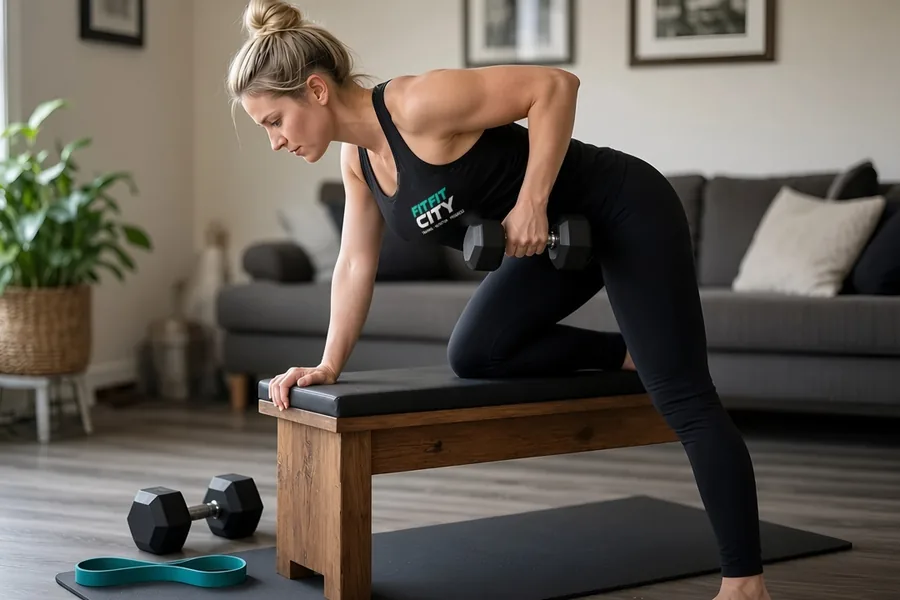
A resistance band is the piece of kit I suggest most often to people starting out at home. It costs less than a takeaway, lives in a drawer and covers moves that are hard to do with bodyweight alone, like rows. The question I get next is whether a strip of rubber can really make you stronger. The evidence says it can.
Do resistance bands actually work?
A 2019 systematic review in SAGE Open Medicine pulled together eight randomised trials comparing training with elastic bands or tubes against training with weight machines or dumbbells. Between them the trials included 224 people aged 15 to 88, from athletes to people with heart disease or COPD. The authors found no clear difference in strength gains between the two, for the upper body or the lower body.
That's encouraging, but keep it in proportion. Eight trials is a small evidence base, the groups were very mixed, and the review measured strength rather than muscle size. The journal later published a correction that swapped round the upper and lower body figures, though the overall conclusion stayed the same.
The NHS is clear that bands count. Its physical activity guidelines list working with resistance bands as a muscle-strengthening activity, and suggest adults do strength work for all the major muscle groups on at least 2 days a week, working to the point where you need a short rest.
Choosing and setting up a band
You'll see two main types. Long loop bands and tube bands with handles are best for rows, presses and squats. Small mini loops sit around your legs for bridges and side steps. Colours usually show resistance, but they vary between brands, so read the label rather than going by colour.
A set of two or three strengths is ideal, because your legs will handle a much heavier band than your shoulders. Before each session, check the band for nicks, tears or sticky patches and bin it if you find any. If you anchor it in a door, use a proper door anchor, shut the door firmly and pull in the direction that keeps the door closed. Keep bands away from your face when they're stretched.
The six-move workout
Do 2 or 3 rounds, with 10 to 15 reps of each move. The last few reps should feel hard but still clean. Rest for about a minute between moves, or go straight through as a circuit once you're comfortable.
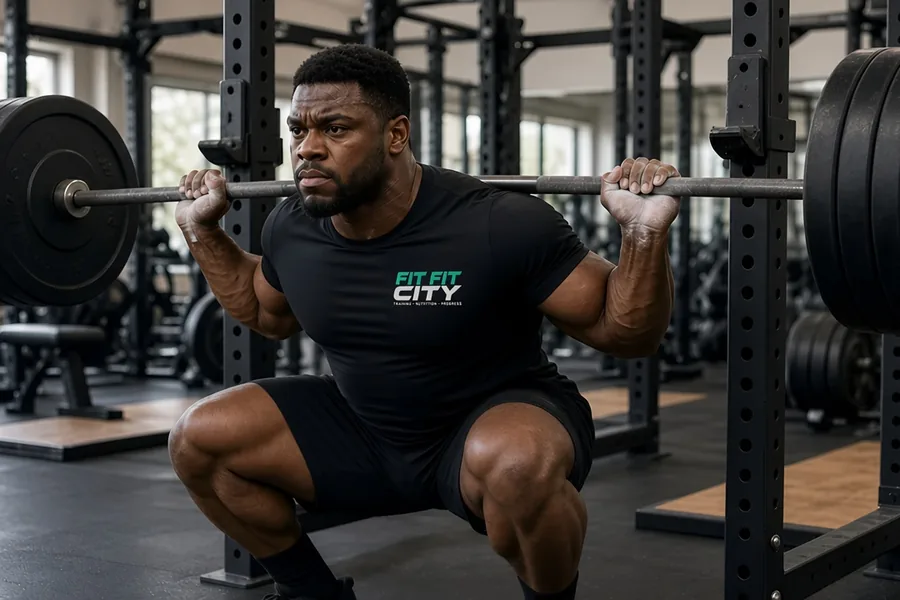
- Band squat. Stand on the band with your feet hip-width apart and hold the ends at your shoulders. Squat down and stand up tall. If squatting is new, learn the shape with a bodyweight squat first. With a dumbbell or kettlebell instead of a band, the goblet squat works the same muscles.
- Band row. Anchor the band at chest height, step back until it's taut, and pull your elbows back past your ribs. It's the home version of a seated cable row.
- Band push-up. Run the band across your upper back and pin an end under each hand. Get a few clean reps of a normal push-up first, using a sofa or kitchen worktop to make it easier.
- Banded glute bridge. Put a mini loop just above your knees and press them gently out against it as you lift your hips. The glute bridge page covers the basic move.
- Band pull-apart. With a light band and straight arms at shoulder height, pull it apart until it touches your chest. Form is on the band pull-apart page.
- Pallof press. Stand side-on to an anchor at chest height, hold the band at your chest and press it straight out without letting it twist you. See the Pallof press for set-up.
If you've got a couple of spare minutes, a face pull or the band version of the rear delt fly is a useful extra for the back of your shoulders.
How to progress
Bands get harder the further they stretch, so the top of each move is the toughest part. To keep making progress, change one thing at a time:
- step further from the anchor, or hold the band shorter
- slow the lowering to about three seconds
- pause for a second at the hardest point
- add a third round
- move up to a stronger band
When you can do 15 clean reps on every round, it's time to make it harder. Our guide to progressive overload explains how to do that without rushing it.
Where it fits in your week
Two or three sessions on non-consecutive days will cover the NHS strength guideline. If you'd like a full programme, the 12-week home workout plan has a band track that follows the same idea for three months. If you have joint pain, a recent injury or a health condition, speak to your GP or a physiotherapist before you start.
This post is general information, not medical advice. If you have a health condition or concerns, speak to your GP or another qualified professional before changing how you eat or exercise. Read our health and fitness disclaimer.
Try FitFitCity free for a week
Start with a free week of full member access: training plans, the workout log, the food diary and 225 recipes. No card needed.
After that, membership is £79 a year, or £9.99 a month on a 12-month minimum.
Start my free weekSee what’s inside