Strength training for women over 50: how to start safely
What UK guidance says about strength training for women over 50, what a new study found about light versus heavier weights, and five moves to start with.
A lot of the women over 50 I've trained started with the same worry. They'd heard strength training was a good idea, but they pictured heavy barbells, grunting and a sore back the next morning. The reality is far gentler than that, and a study published this month adds a useful point about how heavy you actually need to go.
What the UK guidance says
The NHS advice is the same starting point for everyone. Adults aged 19 to 64 should do strengthening activities that work all the major muscle groups (legs, hips, back, abdomen, chest, shoulders and arms) on at least two days a week, alongside 150 minutes of moderate activity, according to the NHS adult guidelines.
From 65, the NHS guidelines for older adults ask for activities that improve strength, balance and flexibility on at least two days a week. The NHS also says that if you've fallen or worry about falling, strength, balance and flexibility work will help you feel stronger and more confident on your feet.
One line in both pages is worth remembering. To get the benefit, you do strength exercises "to the point where you need a short rest before repeating the activity". That's the whole idea in a sentence: the effort matters more than the equipment.
What the new study found
A team from universities in Portugal, Italy and Brazil published a small trial in Experimental Gerontology on 1 October. Twenty-seven women with an average age of about 68 did two separate eight-week strength programmes, with a 12-week break in between.
In one programme they used weights they could lift for about 15 reps (lighter). In the other they used weights they could lift for about 10 reps (heavier). Muscle mass was estimated with a DEXA scan.
Both approaches led to similar gains in estimated muscle mass, with no clear winner. The researchers also noticed that people responded very differently. Some women gained in both programmes, and about a quarter gained little in either.
The caveats
This was a small study in women who were mostly in their late 60s, over eight weeks at a time. Muscle mass was estimated rather than measured directly, and it doesn't tell us about strength, falls or long-term health. So I'd take it as reassurance rather than a rule.
What it means if you're starting out
For a beginner, the message is encouraging. You don't have to start heavy. A weight you can lift 12 to 15 times, where the last couple of reps feel hard, is a perfectly good place to begin. If you don't respond as quickly as a friend does, that's normal too, and it's not a sign you're doing it wrong.
Five moves to start with
These work at home or in the gym, and each one can be made easier or harder.
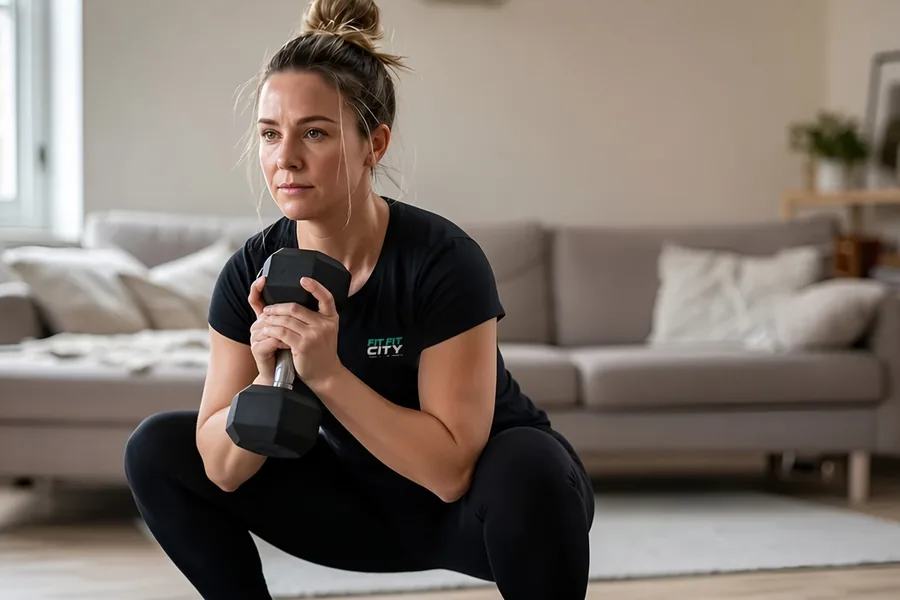
- Squat to a chair. Sit down to a chair and stand back up. Make it harder by holding a dumbbell for a goblet squat.
- **Glute bridge.** Lie on your back and lift your hips. Make it harder by pausing at the top or doing one leg at a time.
- **Step-up.** Use the bottom stair and hold the banister if you need to. Make it harder with a higher step or a dumbbell in each hand.
- **Incline push-up.** Hands on a kitchen worktop or a sturdy table. The lower the surface, the harder it gets.
- **Bird dog.** On hands and knees, reach one arm and the opposite leg out. It's a good one for balance and trunk control.
Aim for two or three sets of each, twice a week, on days that aren't back to back. When the last few reps stop feeling hard, add a few reps, then a little weight. That's progressive overload in plain terms, and it's how the gains keep coming.
When to check with your GP first
The NHS suggests speaking to a GP first if you haven't exercised for some time, or if you have medical conditions or concerns. I'd add a physio for any joint that's been giving you trouble. Some muscle soreness a day or two after a new session is normal. Sharp pain, chest pain, dizziness or feeling unwell is not, so stop and get it checked.
Where to go from here
Start with two short sessions a week and keep a note of what you did, so you can see yourself getting stronger. If you'd like a ready-made routine, our home workout plan uses simple moves like these, and our eccentric training post covers another research-backed way for older adults to build strength. A FitFitCity membership adds full plans and a workout log if you want everything in one place.
This post is general information, not medical advice. If you have a health condition or concerns, speak to your GP or another qualified professional before changing how you eat or exercise. Read our health and fitness disclaimer.