Rear delt exercises: 5 moves for the back of your shoulders
Five rear delt exercises for the gym or home, what research says about which moves work the back of your shoulders hardest, and how many sets to do each week.
Ask most people what they train on shoulder day and you'll hear presses and side raises. The back of the shoulder gets forgotten. That's a shame, because the rear delts are small, quick to train and easy to fit at the end of any session. You don't need much kit either. A pair of light dumbbells or a band is enough to start.
What your rear delts do
Your deltoid has three parts: front, side and rear. The rear part pulls your upper arm backwards and out to the side, the movement you make when you open your arms wide or start a row. It works with the muscles between your shoulder blades to keep your shoulders steady.
Most gym programmes are heavy on pushing, which loads the front of the shoulder. Adding a few sets of pulling work for the back of the shoulder helps keep things balanced. It won't fix your posture on its own, but strong rear delts and upper back muscles make rows, carries and overhead work feel more solid.
What the research says
A few small studies have measured how hard the rear delts work in different exercises, using sensors on the skin (EMG).
- The reverse pec deck came out on top. In a 2015 study of 12 trained men, the rear delts worked harder on the reverse pec deck than on a seated row or an inclined lat pulldown.
- Grip changes the job. A 2013 study of 19 trained men found that holding the reverse fly machine's handles with palms facing each other gave more rear delt activity than palms facing down.
- Bands are a fair swap. In a 2018 study of 29 men and women, reverse flys with a band gave slightly lower rear delt activity than dumbbells, but the authors concluded bands are a feasible alternative.
Keep these in proportion. The groups were small and mostly young, trained men, and EMG shows how active a muscle is during a set, not how much it grows over months. The practical message is simple: moves where your arms sweep out wide, rather than pulling back by your sides, are the ones that hit the rear delts most directly.
Five rear delt exercises
The rear delt fly page has the full step-by-step form, so here's when to use each move.
- Dumbbell rear delt fly. The go-to, at home or in the gym. Hinge forward with a flat back and sweep light dumbbells out to the sides. Start lighter than you think, often 2 to 5 kg.
- Reverse pec deck. The machine version and the top performer in the 2015 study. Use the neutral handles if your machine has them, and add weight in small steps.
- Face pull. A cable or band at face height, pulled towards your forehead with your elbows high. It also works the small muscles that turn your shoulder outwards.
- Band pull-apart. Hold a light band at shoulder height and pull it apart until your arms are out wide. Great as a warm-up before pressing, or at the desk.
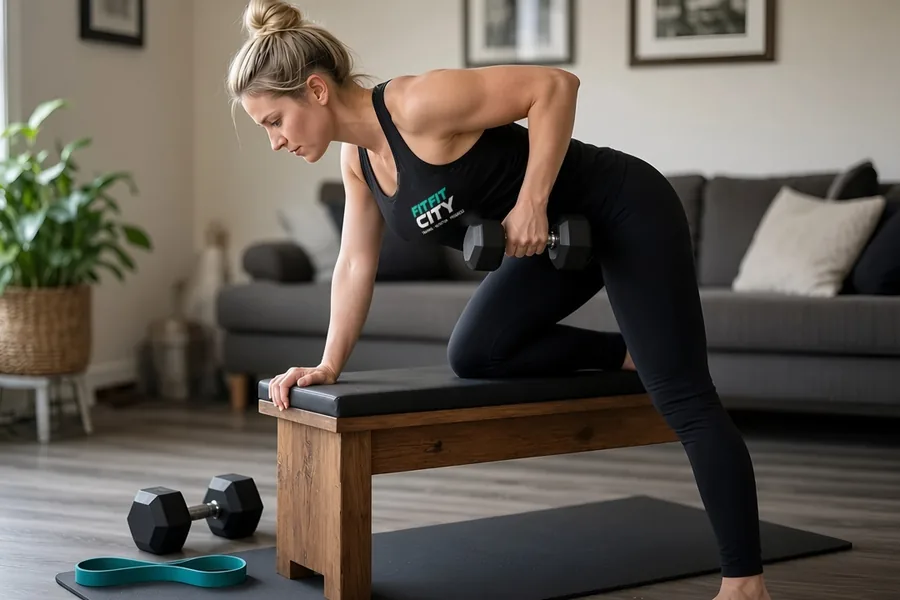
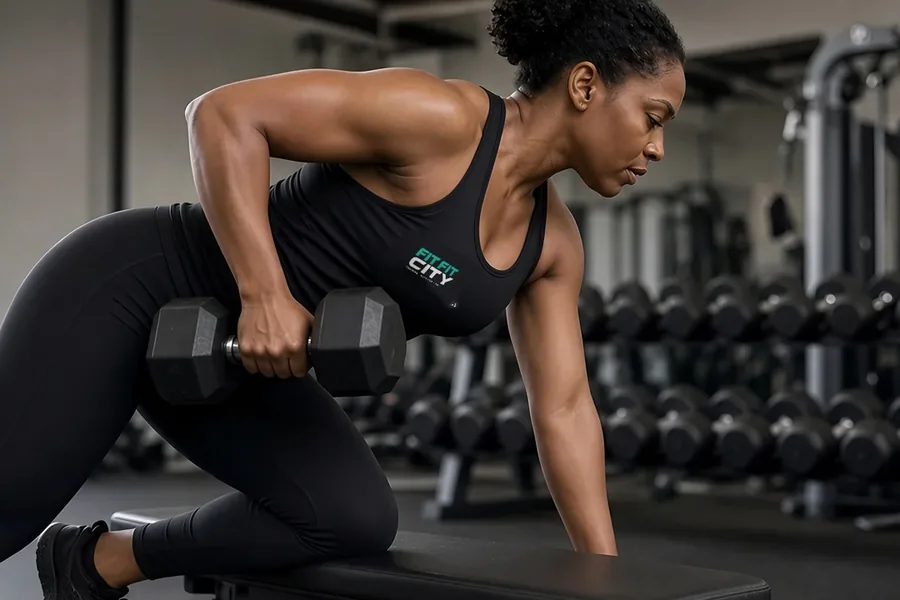
- Chest-supported row with wide elbows. Lie face down on an incline bench and row with your elbows flared to about 45 to 60 degrees. No incline bench? A one-arm dumbbell row on a flat bench, as in the photo at the top, also trains your upper back. The bench stops you cheating, and the wide elbows shift more of the work to the back of your shoulders.
How many sets and reps
The NHS physical activity guidelines suggest strength work for all the major muscle groups on at least 2 days a week. For the rear delts, that could be:
- Pick one or two moves from the list each session.
- Do 2 or 3 sets of 12 to 15 reps, finishing each set with two or three good reps left.
- Rest about a minute between sets.
- Progress slowly. Add a rep or two before you add weight, and use the smallest jump you can. Our progressive overload guide explains how.
Small muscles tire quickly, and swinging is the giveaway that the weight is too heavy. Slow and controlled beats heavy here every time.
Fitting them into your week
At home, a rear delt fly with dumbbells or two filled water bottles plus a band pull-apart covers it. Both appear in our 12-week home workout plan. In the gym, add the reverse pec deck or face pulls to the end of a pull or upper-body day. The beginner 3-day gym plan already includes rear delt flys.
If you'd like plans that put these moves in the right place, with a log that shows last week's numbers, you can try FitFitCity free for a week.
This post is general information, not medical advice. If you have a health condition or concerns, speak to your GP or another qualified professional before changing how you eat or exercise. Read our health and fitness disclaimer.
Try FitFitCity free for a week
Start with a free week of full member access: training plans, the workout log, the food diary and 225 recipes. No card needed.
After that, membership is £79 a year, or £9.99 a month on a 12-month minimum.
Start my free weekSee what’s inside